Case study · Real-time platform
LudoAfrik — African games online, over video with your family
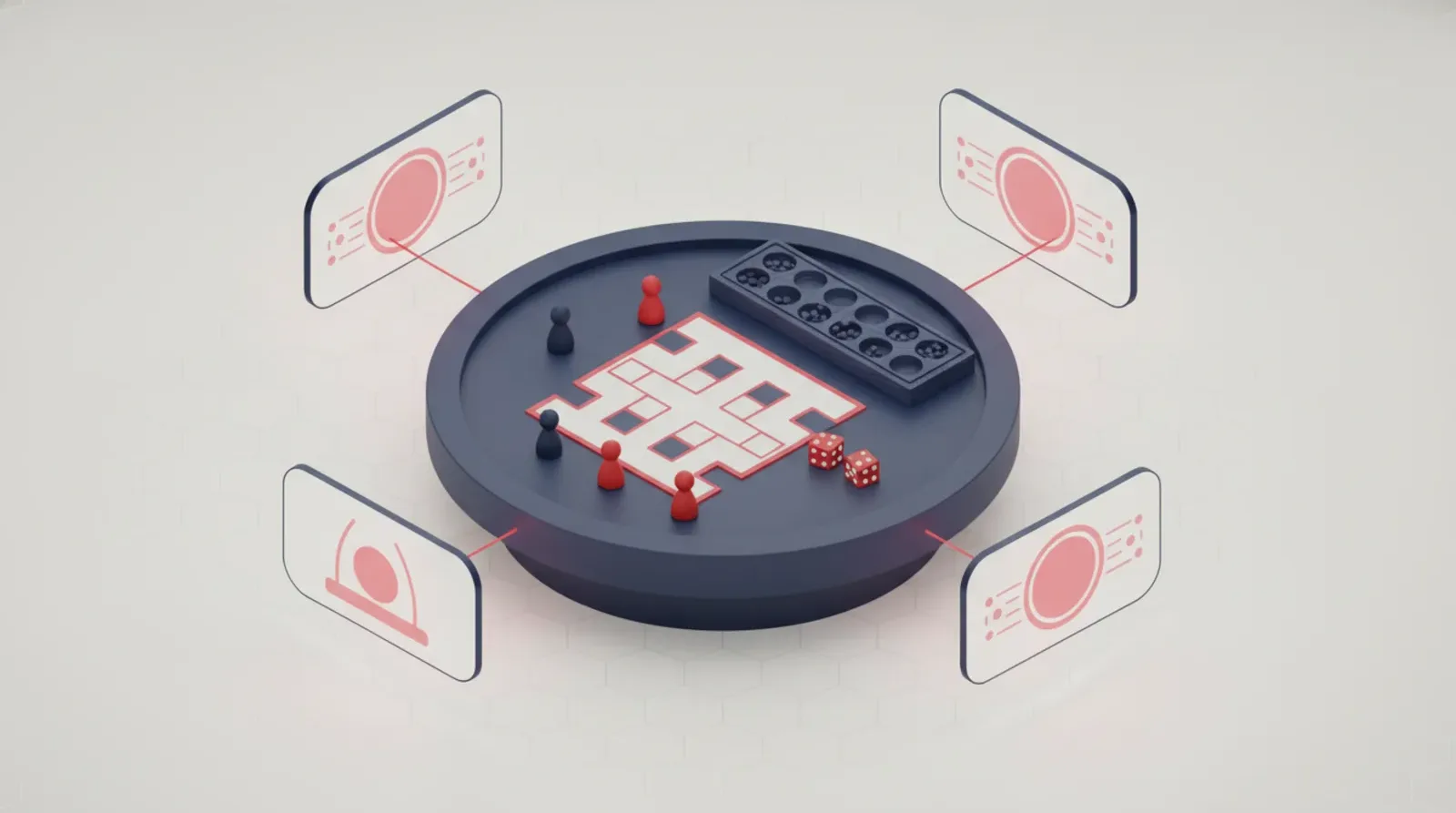
A multiplayer platform for African board and card games, with video calling built into the game itself. Designed, released and operated by SeedVision, which publishes it.
Engagement period: · Page last reviewed on
Context
LudoAfrik is aimed at families and diaspora communities separated by distance: bringing back online the ludo sessions that used to gather everyone. Five games are available — ludo for two to four players, checkers, 151, awalé and belote — with avatars of characters from the continent.
Challenge
A board game online is played by several people at once, and the session is only worth it if you can see and hear each other. That meant holding a shared game state, strictly identical for every player, and a live audio and video stream at the same time — in a plain browser, on mobile as well as desktop, with nothing to install.
Approach
SeedVision built the platform around a Node.js server that is authoritative over game state: it validates every move, never the browser. Video runs on a channel separate from the game channel, so a camera dropping out never takes the game down with it. Machine-driven opponents let a player start a game alone, in one click, when nobody else is around.
Engagement timeline
- — Design and release. Server-side rules engine for the five games, real-time rooms, video calling embedded in the game, progression and leaderboards, then going live.
- — Continuous operation. Watching rooms and reconnections, tracking video quality across networks, and constantly arbitrating between live fidelity and keeping the game itself intact.
Before and after
Playing with distant family
Before: A game in one window, a video call in another
After: Video calling lives inside the game itself
Starting a game
Before: Wait for other players to come online
After: A game against the machine in one click
Access
Before: Install one app per game
After: Five games in the browser, mobile or desktop, with no install
Results
- Five games online: ludo for two to four players, checkers, 151, awalé and belote
- Video calling built into the game: you see and hear the other players live
- Machine opponents available in one click, with no waiting for other players
- Full progression: experience, daily streaks, achievements and leaderboards
- Playable in the browser, on mobile and desktop, with no installation
- Free to play: tokens only buy animated gifts, which are purely cosmetic
Technologies and scope
- Temps réel
- Visio intégrée
- Node.js
- Multijoueur
- En production depuis 2025
Engagement period:
What the engagement covers, block by block
- Five games, one rules engine — Ludo for two to four players, checkers, 151, awalé and belote. Each game has its own rules, but all share the same turn, room and end-of-game mechanics.
- Built-in video calling — Players see and hear each other during the game, in the same interface as the board.
- Progression and social life — Experience, daily streaks, achievements, leaderboards, avatars of characters from the continent, and animated gifts sent mid-game.
What running it demands
- The server is authoritative, never the browser — In a game with leaderboard stakes, a client that computes its own result is a client that can be edited. Every move is therefore validated server-side, which makes cheating moot rather than detectable after the fact.
- A dropped camera must not kill the game — The video channel is the most fragile link: mobile networks, tunnels, asymmetric bandwidth. It is isolated from the game channel, so an interrupted call does not stop players finishing the game.
- Reconnection is a normal case, not an error — On mobile, a player switches from wifi to 4G, locks the screen, takes a call. Getting their seat back in the running game is part of normal behaviour, not an exception path.
Architecture choices, and why
- Game state centralised server-side — One truth for every player, held on a Node.js server. That settles cheating, disagreements between clients and recovery after a disconnection in one go.
- Video channel separate from the game channel — Two opposing requirements: the game wants reliability, video wants immediacy. Mixing them would have made the game pay for the video network's bad days.
- The browser as the only target — No installation, no app store, one link that opens on mobile and desktop alike — decisive for an audience spread across several countries and device types.
Technical and regulatory milestones
Public, dated facts that constrain the scope.
- — WebRTC becomes a W3C Recommendation. A public technical milestone, cited here because it is what makes the core of the product possible: live audio and video inside a browser, with no plugin and nothing to install.
- — The Digital Services Act applies to all platforms. A public regulatory milestone. It is cited here because it constrains any platform hosting interactions between users: reporting, moderation and user information stop being optional.
Questions about this engagement
Do you need to install an app to play?
No. All five games run in the browser, on mobile and desktop alike. That is a deliberate choice: the audience is spread across several countries and device types, and a link that opens everywhere beats one app per store.
What happens if the video call drops mid-game?
The game carries on. The video channel is deliberately separate from the game channel, because it is the most fragile link — mobile networks, tunnels, asymmetric bandwidth. An interrupted call never stops players finishing the game.
How is cheating prevented on the leaderboards?
The server is authoritative over game state and validates every move; the browser never computes its own result. Cheating becomes moot instead of being caught after the fact.
Related services
- MLOps industrialisation — 15 to 30 days
- Run & maintenance — Monthly retainer or daily-rate engagements
Nearby case studies
Related reading on the blog
- Agentic Search: Mistral Triples RAG Accuracy
- LLM Output Validation While Streaming: Lessons from NarrateAI
- NVIDIA MPS on EC2: Cutting GPU Inference Infra by 75%
- Claude for Finance: Anthropic Ships 10 Ready-Made Agents
- GitHub Copilot Goes Usage-Based: An MLOps Playbook for June 1
- RAG access control: checking permissions in real time
- Production-Grade Agents: LangGraph Fault Tolerance Primitives
Talk about your project
Facing a challenge close to LudoAfrik — write to contact@seedvision.fr — reply within 24 hours.